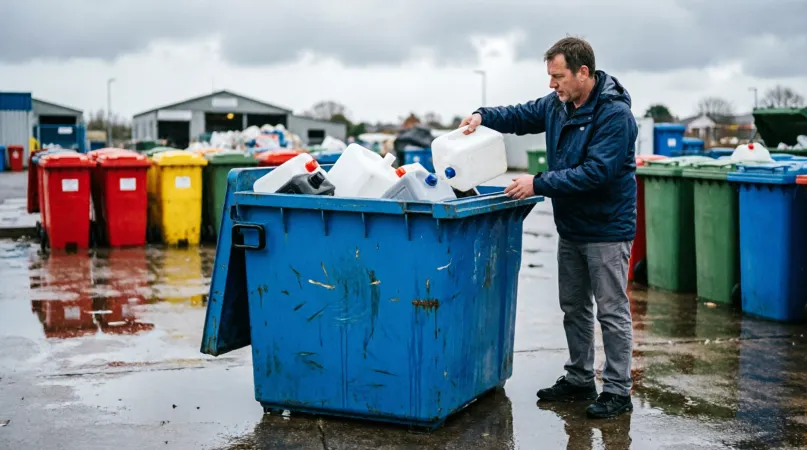
How to Dispose of Wallpaper Paste Safely in the UK?
 By Snappy
Anyone wondering how to dispose of wallpaper paste should first check the product label or Safety Data Sheet, then confirm the relevant local council rules. Wallpaper adhesives are not all formulated in the same way, so there is no single disposal method that applies to every product.
As a practical starting point:
- Check The Product Instructions to find any specific disposal requirements.
- Keep Leftover Paste Out Of Sinks And Toilets unless the manufacturer and relevant wastewater guidance specifically allow that method.
- Contain Small Quantities Securely and allow them to solidify where the product instructions and local waste rules permit.
- Check Local Council Requirements before placing dried wallpaper paste in household waste.
- Arrange Suitable Disposal For Larger Quantities through the council, an appropriate waste facility or an authorised waste collector.
The main principle behind safe wallpaper paste disposal is simple. The product being discarded, the amount left over and local disposal rules should all be considered before anything goes into a bin or drain.
What Is Wallpaper Paste Made From, And Why Does It Matter For Disposal?
Wallpaper paste is an adhesive designed to hold wallcoverings securely to a prepared surface. However, the term covers several different formulations.
That matters because wallpaper adhesive disposal shoul Jd be based on the actual product rather than assumptions about wallpaper paste in general.
Powdered Wallpaper Paste
Traditional powdered or flake wallpaper pastes are commonly mixed with water before application. Some are based largely on modified starches or similar materials.
A dry powder and the same product after it has been mixed with water may have different handling and waste considerations. Leftover powder should therefore remain in its original packaging wherever possible until its disposal instructions have been checked.
Ready-Mixed Wallpaper Adhesive
Ready-mixed wallpaper paste is supplied as a usable adhesive rather than a dry powder. Depending on the product, its formulation may include starch, polymers, preservatives or other ingredients designed to provide stronger adhesion and longer working times.
For that reason, ready-mixed wallpaper adhesive should not automatically be disposed of in the same way as a basic powdered paste.
Why Wallpaper Paste Products Can Require Different Disposal Methods?
Descriptions such as “water-based” or “starch-based” do not automatically determine whether a product belongs in household rubbishhousehold rubbish, a recycling centre or another waste stream.
The manufacturer is one of the best starting points when the correct disposal route is uncertain. For example, Bartoline’s All Purpose Wallpaper Adhesive Safety Data Sheet classifies that specific dry and water-mixed Jproduct as non-hazardous waste, while also instructing users not to discharge it into drains and to dispose of waste in accordance with local waste-authority requirements.
That guidance applies to the named product, not every wallpaper adhesive sold in the UK. Checking the label or SDS prevents one manufacturer’s instructions from being incorrectly applied to another product.
How To Dispose Of Wallpaper Paste In Small Quantities?
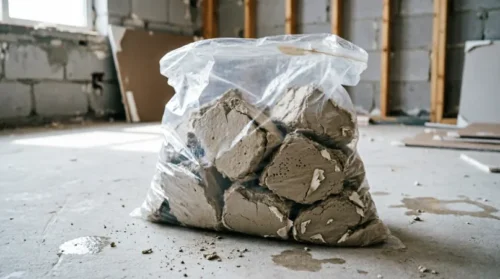
For a small amount of leftover wallpaper paste, the process should begin with identification rather than disposal.
Step 1: Check The Product Label Or Safety Data Sheet
The packaging may contain disposal instructions or identify where additional product safety information can be found.
Look for:
- Disposal Information describing how unwanted material should be handled.
- Environmental Precautions relating to drains, groundwater or watercourses.
- Product Classification showing whether special handling requirements apply.
- Manufacturer Contact Information where disposal advice is unclear.
A Safety Data Sheet can provide more detailed information than a short product label, particularly for ready-mixed or specialist adhesives.
Step 2: Allow Suitable Wallpaper Paste To Dry Or Solidify
Where the manufacturer and local waste rules permit the material to enter residual household waste, allowing a small amount of suitable paste to dry or solidify can reduce the risk of liquid leaking from a bin.
The paste can be kept in a secure disposable container while it solidifies. It should be stored away from children and pets during this process.
Drying the material does not automatically make every wallpaper adhesive acceptable for a household bin. It simply changes its physical state. The correct disposal route still depends on the product and the council’s requirements.
Step 3: Check Local Council Waste Rules
Local authorities determine what they collect through normal household waste services and what residents should take elsewhere.
The GOV.UK household waste guidance directs householders to check their council’s services and explains that waste not accepted through normal collection may need to go to a local recycling centre, permitted private waste site or registered collection business.
This is particularly important when working out how to dispose of wallpaper paste in the UK, because waste arrangements can differ between council areas.
Step 4: Dispose Of The Solidified Paste Correctly
If the manufacturer and local council both allow the solidified material to enter general household waste, it should be contained properly so that dried residue does not spill during collection.
If the local authority does not accept it through ordinary household rubbish, the next step should be to check an appropriate household waste recycling centrerecycling centre or other approved disposal service.
Can Wallpaper Paste Go Down The Sink?
Wallpaper paste should not automatically be poured down the sink.
Adhesive is designed to stick to surfaces. Sending a concentrated quantity through household plumbing can leave residue and may contribute to drainage problems, particularly if the paste thickens or encounters other debris within the pipework.
More importantly, manufacturer guidance for some wallpaper adhesives specifically warns against discharge into drains.
The fact that wallpaper paste has been mixed with water does not mean it is suitable for wastewater disposal. Adding more water also does not necessarily change the product’s disposal requirements.
When deciding whether wallpaper paste can go down the sink, the safest order is:
- Check The Product Instructions
- Check Relevant Local Guidance
- Use An Approved Waste Route If Drain Disposal Is Not Clearly Permitted
Avoid relying on general online claims that all wallpaper paste can be diluted and washed away. Different products can contain different ingredients.
Can Wallpaper Paste Be Flushed Down The Toilet?
A toilet should not be treated as an alternative disposal route for unwanted wallpaper adhesive.
Flushing a bucket or container of leftover paste may send concentrated adhesive into household drainage and the sewer system. Diluting the paste first does not automatically make this appropriate.
If a manufacturer gives specific disposal instructions, those instructions should be followed. Where the packaging does not address toilet or drain disposal, the more cautious option is to keep the waste contained and find an appropriate solid-waste route.
Can Wallpaper Paste Go In The General Waste Bin?
Whether wallpaper paste can go in a general waste bin depends on its condition, formulation and local collection rules.
Wet Wallpaper Paste
A container of liquid or semi-liquid wallpaper adhesive should not simply be tipped into a household bin.
Wet paste can leak from containers, contaminate other waste and create problems during collection. It may also be a product that the local council expects residents to take to another facility.
Dried Wallpaper Paste
Dried or solidified wallpaper paste may be easier to handle, but drying alone does not determine its legal or appropriate waste classification.
Where the product instructions and council rules permit dried adhesive in residual household waste, it should be securely contained before disposal.
If either source specifies another disposal route, that instruction should take priority.
Check Local Council Requirements
A neighbour in another borough may receive different disposal instructions because councils can operate different collection and household waste recycling arrangements.
The postcode and local authority therefore matter when deciding how to get rid of wallpaper paste correctly.
What Should Be Done With A Large Amount Of Leftover Wallpaper Paste?
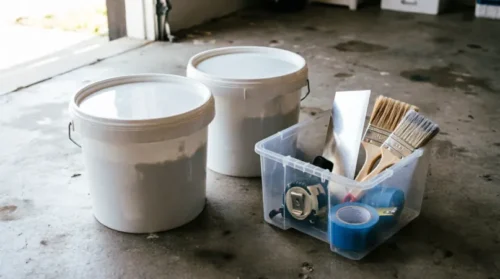
A nearly full bucket of wallpaper adhesive requires more care than the thin residue remaining after one wall has been papered.
Large quantities should not be divided between several household rubbish bags simply to avoid checking the correct disposal route.
Check The Local Household Waste Recycling Centre
A household waste recycling centre may accept some types of DIY and decorating waste, but residents should check before travelling.
Confirm:
- Whether Adhesives Are Accepted
- Whether A Booking Is Required
- Whether Quantity Restrictions Apply
- Whether Containers Need To Be Sealed
- Whether The Facility Accepts The Particular Type Of Product
Not every recycling centre handles the same materials.
Ask The Council About Suitable Waste Services
If the recycling centre does not accept the product, the local council may be able to identify another appropriate facility or collection service.
The important point is to describe the waste accurately. Saying “wallpaper paste” is more useful than describing it simply as general decorating rubbish, particularly when a substantial quantity remains liquid.
Use An Authorised Waste Collection Company
Professional rubbish removal can be useful when wallpaper paste forms part of a larger decorating or renovation clearance.
A householder may have stripped wallpaper, flooring, packaging, old fittings and other unwanted materials alongside the adhesive. Collecting the wider load professionally may be more practical than making several separate journeys.
Before transferring household waste to a private collector, the company’s authority to carry waste should be checked. This helps reduce the risk of waste being handled or dumped illegally.
Wallpaper Paste Disposal: Quick Comparison Table
| Type Of Waste | Recommended First Step | What To Check |
|---|---|---|
| Small Amount Of Wet Paste | Identify the product and contain it securely | Manufacturer instructions |
| Solidified Wallpaper Paste | Check whether residual waste is permitted | Local council rules |
| Large Quantity Of Paste | Contact the council, recycling centre or authorised collector | Facility acceptance |
| Unknown Wallpaper Adhesive | Identify the product before disposal | Label or Safety Data Sheet |
| Paste Produced By A Tradesperson | Confirm who produced the waste | Relevant waste duty requirements |
The table provides a useful starting point, but the actual product instructions remain important when deciding how to dispose of leftover wallpaper paste.
What Can Be Done With Leftover Wallpaper Paste Before Disposal?
Disposal may not always be necessary immediately. If the adhesive remains usable, preventing waste can be preferable to throwing it away.
Keep Usable Paste For Future Decorating
Some wallpaper pastes can be stored for a limited period, provided this is allowed by the manufacturer’s instructions.
The container should be properly closed, labelled and stored under the recommended conditions. Mixed paste that has changed smell, consistency or appearance should not automatically be assumed to remain suitable for use.
Give Away Unused Or Unopened Wallpaper Paste
An unopened packet or usable container of wallpaper adhesive may be useful to somebody carrying out another decorating project.
Passing on usable material can prevent waste, but damaged, contaminated or deteriorated products should not be presented as suitable for reuse.
Check Before Composting Or Reusing Adhesive
Wallpaper paste should not automatically be placed in a compost bin because a product happens to contain starch or another plant-derived ingredient.
Commercial formulations can contain preservatives and other additives. The complete formulation and manufacturer instructions matter more than one individual ingredient.
Who Is Responsible For Wallpaper Paste Left By A Decorator?
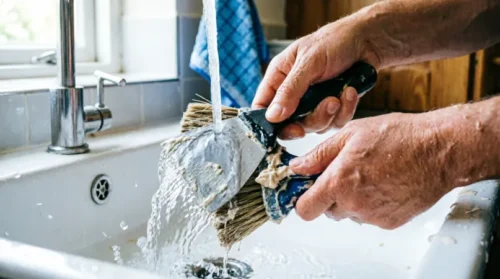
Responsibility can change when a professional decorator or other tradesperson produces the waste.
In England and Wales, the government’s Waste Duty of Care Code of Practice states that when a tradesperson carries out work at a domestic property, the tradesperson is responsible for the waste they produce, including its transport and disposal.
For example, if a decorator mixes wallpaper paste as part of a contracted wallpapering job and the unused material becomes waste from that work, it should not automatically be treated as waste produced by the householder.
The situation changes if the householder adds their own unrelated waste to a tradesperson’s collection.
Waste legislation and regulatory arrangements differ across the UK, so householders in Scotland and Northern Ireland should check the requirements applying in their jurisdiction where responsibility is uncertain.
When Should Professional Rubbish Removal Be Considered?
Professional rubbish removal is usually unnecessary for a tiny amount of ordinary decorating residue. It becomes more practical when wallpaper paste is part of a much larger clearance.
Typical situations include:
- Several Rooms Being Redecorated
- Large Amounts Of Stripped Wallpaper
- Flooring And Decorating Materials Being Removed
- Rental Properties Being Refurbished
- House Clearances Taking Place Alongside Decorating
Large Quantities Of Renovation Waste Being Generated
The collector should be told about any liquid adhesives before collection is arranged. This allows the waste company to confirm whether the product can be accepted rather than discovering an unsuitable material when the team arrives.
For a larger decorating clear-out, Snappy Rubbish Removals can be contacted to discuss the waste involved and confirm what can be collected before a booking is made.
How To Dispose Of Wallpaper Paste Responsibly
The most reliable approach to safe wallpaper paste disposal is to follow a clear order rather than choosing a disposal method first.
- Identify The Wallpaper Adhesive
- Read The Label And Safety Data Sheet
- Keep Concentrated Paste Out Of Drains Unless Specifically Permitted
- Check The Local Council’s Waste Requirements
- Contain Or Solidify Small Amounts Where Appropriate
- Check A Recycling Centre For Larger Quantities
- Use An Authorised Collector When Professional Removal Is Needed
This approach also helps avoid treating all wallpaper pastes as though they have the same ingredients and waste classification.
Conclusion: How To Dispose Of Wallpaper Paste Safely?
Knowing how to dispose of wallpaper paste safely starts with the specific adhesive rather than a universal rule. Powdered, mixed and ready-to-use products can have different formulations, and manufacturers may provide different disposal precautions.
Small amounts should be kept contained while the product instructions and council rules are checked. Wallpaper paste should not automatically be poured into a sink or flushed down a toilet simply because it can be diluted with water.
For larger quantities, the local council or household waste recycling centre should be consulted. Where wallpaper paste is part of a wider renovation or decorating clearance, an authorised waste collection servicewaste collection service can provide a more practical disposal option.
Taking a few minutes to identify the product and confirm the appropriate waste route is the safest way to deal with leftover wallpaper adhesive without creating unnecessary drainage, collection or waste-management waste-management problems.
Frequently Asked Questions
Can Wallpaper Paste Go In The Bin?
It may be possible to dispose of some dried or solidified wallpaper paste through residual household waste, but the manufacturer’s instructions and local council rules should be checked first.
Can Wallpaper Paste Go Down The Sink?
Wallpaper paste should not automatically be poured down a sink. Some manufacturer guidance specifically warns against discharging adhesive into drains.
Can Wallpaper Paste Be Flushed Down The Toilet?
Flushing wallpaper paste is not a suitable default disposal method. Diluting adhesive with water does not necessarily make it appropriate for the sewer system.
How Can Wallpaper Paste Be Dried Before Disposal?
Where permitted, a small quantity can be kept in a suitable secure container until it solidifies. It should remain away from children and pets while drying.
Is Wallpaper Paste Hazardous Waste?
Some wallpaper pastes are classified as non-hazardous, but that cannot be assumed for every product. The label or Safety Data Sheet should be checked.
Can Wallpaper Paste Be Taken To A Recycling Centre?
Some household waste recycling centres may accept relevant decorating waste. The local facility should be checked before travelling because acceptance rules vary.
What Should Be Done With A Large Amount Of Leftover Wallpaper Paste?
A large quantity should be checked with the local council, an appropriate waste facility or an authorised waste collection company rather than placed directly into household rubbish.