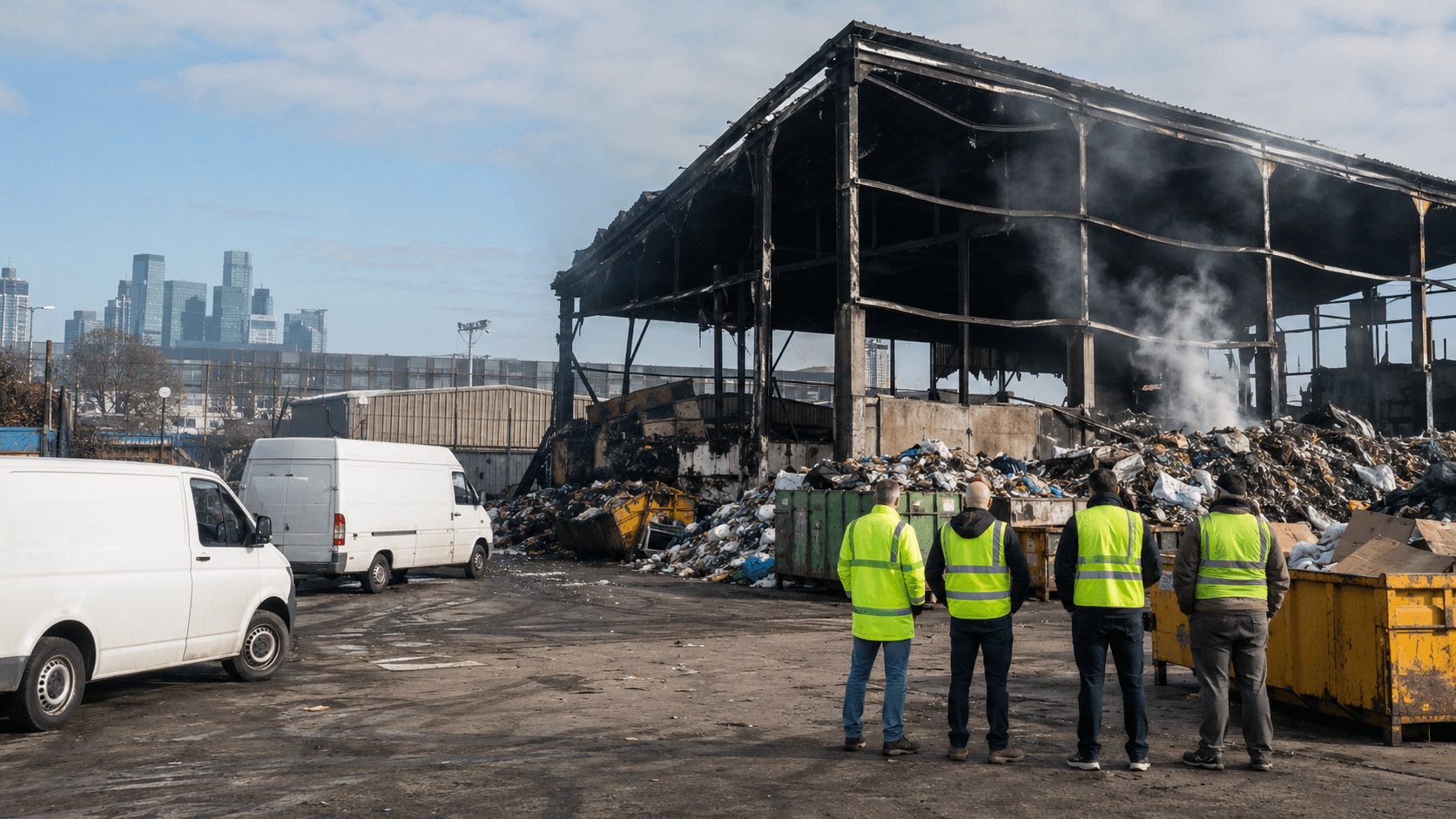
Bermondsey SE16 Recycling Centre Fire
 By Fernando
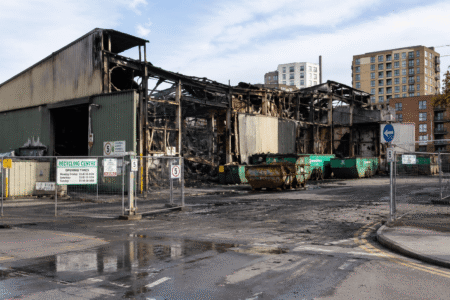
SE16 Recycling Centre Fire Highlights the Importance of Responsible Waste Disposal
A fire at a recycling centre in SE16 is not only a local disruption. For contractors, builders, tradespeople, landlords and clearance teams, it is also a reminder of how important waste planning is on every job.
Our teams arrived at the site this morning and saw first-hand the aftermath of what had happened. As one of the large regular partners of the recycling centre, we understand how important this facility is for contractors, waste carriers and local businesses who rely on it every day.
Most people notice the smoke, emergency response and temporary disruption. But behind that, there is another issue: what happens when a waste facility suddenly becomes unavailable?
For contractors, waste disposal is often part of the daily routine. A van is loaded, the waste is taken to a tipping facility, and the team moves on to the next job. When that routine is interrupted, the whole working day can be affected.
A full van cannot collect another load. A site cannot move forward if old materials are still in the way. A kitchen rip-out, bathroom renovation, garden clearance or building project can quickly slow down when waste is not removed on time.
That is why incidents like this matter beyond the recycling centre itself.
A Serious Incident Seen First-Hand
When our teams arrived this morning, the impact of the fire was clear. For businesses that regularly tip at the centre, it was a strong reminder of how quickly a normal working routine can be disrupted.
Recycling centres are essential to London’s waste system. They handle huge volumes of material every day, from household rubbish and bulky waste to builders’ waste, timber, furniture, packaging and commercial loads.
When a facility like this is affected, the consequences are not limited to the site itself. Contractors may need to find alternative tipping routes, adjust job schedules, delay collections or spend extra time travelling to other authorised facilities.
For companies that depend on fast waste movement, even one day of disruption can create pressure.
Waste Disposal Should Be Planned Before the Job Starts
Many contractors carefully plan materials, parking, access, tools and labour. Waste disposal is sometimes left until later.
That can be a mistake.
Waste is part of the job from the beginning. Before work starts, it helps to know what type of waste will be produced, how much space it will take, whether it needs separating, and where it can legally be taken.
For example, a small refurbishment may create timber, plasterboard, packaging, old fixtures, metal, electrical items and general rubbish. These materials may not all be accepted in the same way or at the same place.
Planning ahead helps avoid delays, extra journeys and unnecessary costs.
One Tipping Route Is Not Always Enough
Many tradespeople have a regular waste site they use because it is familiar, local and convenient. But relying on one location can become a problem when there is a closure, queue, access restriction or emergency incident.
A recycling centre fire can lead to temporary disruption, traffic changes, smoke restrictions, redirected vehicles and delays for regular users.
For contractors, this means it is sensible to have a backup plan. That could include alternative licensed facilities, staged waste removal, separating materials before loading, or arranging collections instead of waiting until the end of the job.
The main point is simple: do not wait until the van is full before deciding where the waste will go.
Mixed Waste Creates More Risk
One important issue raised by waste site fires is the danger of mixed loads.
On busy jobs, it is easy for everything to end up in one pile. Timber, plastic, cardboard, metal, old appliances, paint tins, rubble, packaging and electrical items may be loaded together just to clear the space quickly.
However, not all waste should be treated the same.
Some items need special care, including:
- batteries
- aerosols
- paint and solvents
- gas canisters
- electrical items
- chemicals
- oil containers
- flammable materials
When these items are hidden inside general rubbish, they can create risks during transport, unloading, sorting and recycling.
Sorting waste properly is not only better for recycling. It also helps reduce safety risks for drivers, site workers and recycling centre staff.
A Clear Site Is Safer and More Productive
Waste left on site can quickly become a hazard.
Broken timber, nails, sharp edges, rubble bags, packaging, old units and bulky items can block walkways and make work harder. On smaller properties, especially flats, terraces and tight London sites, waste can take over the working area very quickly.
A clear site helps trades work faster and more safely. It also gives a better impression to customers, neighbours, landlords and managing agents.
For contractors, good waste management is part of professional site control.
SE16 Is a Busy Area for Waste Movement
Bermondsey, Rotherhithe, Surrey Quays, Canada Water and the wider South East London area see constant movement of construction, renovation, clearance and commercial waste.
When a local recycling or waste transfer facility is disrupted, the impact can spread beyond one postcode. Contractors may face longer travel times, redirected loads or increased pressure on other facilities.
This is why local incidents can quickly become operational problems for people working across London.
Even a short disruption can matter when several jobs are booked in one day.
What Contractors Should Check Before Tipping Waste
Before taking waste to any facility, contractors should check the load carefully.
Useful questions include:
- Is the waste properly separated?
- Are there any batteries, aerosols, chemicals or gas canisters hidden in the load?
- Is plasterboard kept separate if required?
- Are electrical items identified?
- Is the waste site open and accepting that type of waste?
- Is there a backup option if access is delayed?
- Is the correct waste paperwork needed?
These checks may only take a few minutes, but they can prevent bigger problems later.
Why Licensed Disposal Matters
Waste must be handled through legal and responsible routes. This matters for homeowners, landlords, businesses and contractors.
Using unlicensed disposal may seem cheaper at first, but it can lead to serious problems if the waste is dumped illegally or handled incorrectly. The person or business that produced the waste can still be questioned if the rubbish is traced back to them.
For contractors, responsible waste disposal protects the job, the customer and the business reputation.
A professional approach means knowing what is being removed, where it is going, and whether it is being handled correctly.
The Main Lesson from the SE16 Fire
The main lesson is that waste disposal should never be treated as an afterthought.
A fire, closure or emergency at a recycling centre shows how quickly normal routines can change. Contractors who rely on daily tipping need to think ahead, separate materials properly and have flexible waste plans in place.
Good waste management helps to:
- keep jobs moving
- reduce site hazards
- avoid unnecessary delays
- protect workers and customers
- improve recycling
- reduce disposal risks
- support legal compliance
Waste may be the last thing removed from a site, but it should be one of the first things planned.
For contractors working in SE16 and across London, the message is clear: a clean, organised and compliant waste plan is not just good practice. It is part of running a professional job.
Incidents like the SE16 recycling centre fire affect more than one facility. They affect the wider network of contractors, waste carriers and businesses that depend on responsible waste disposal every day. As regular partners of the centre, our teams understand how valuable these facilities are — and how important it is to use them safely, correctly and with respect for the people who work there.