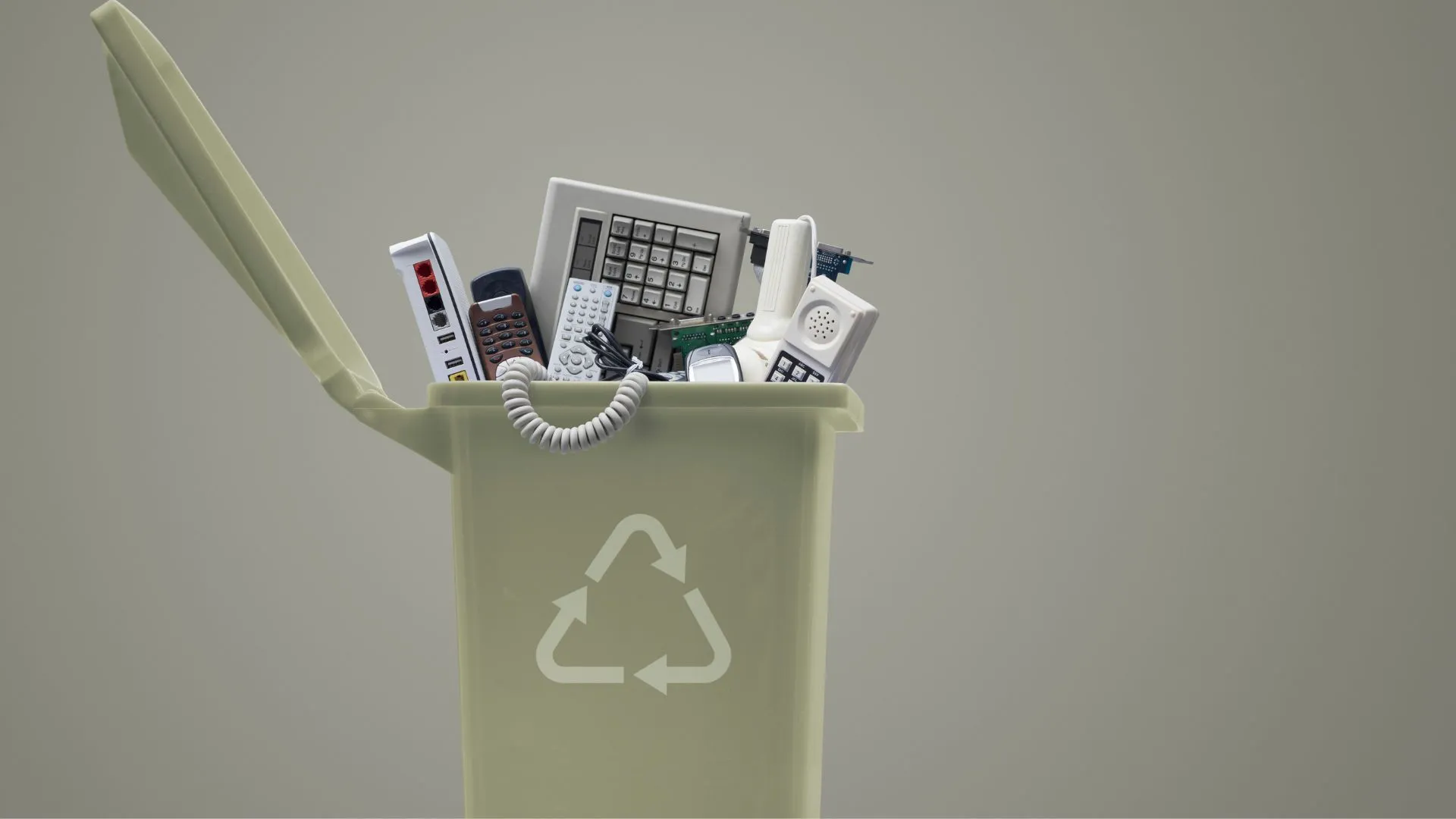
Why Recycle E-Waste Instead of Landfill?
 By Snappy
Old televisions, laptops, mobile phones, printers, kitchen appliances and other electrical items can quickly become clutter once they stop working or are replaced. It may be tempting to treat them like ordinary household rubbish, but electrical waste needs different handling.
Recycling e-waste instead of sending it to landfill helps recover useful materials, reduces environmental risks and ensures electrical equipment is managed through the correct waste stream. In the UK, waste electrical and electronic equipment is commonly known as WEEE, and specific rules exist to encourage its collection, reuse and recycling rather than disposal with general rubbish.
What Is E-Waste?
E-waste is unwanted electrical or electronic equipment. It can include both large appliances and smaller everyday devices, such as:
- TVs and computer monitors
- Laptops, computers and printers
- Mobile phones and tablets
- Fridges, freezers and air-conditioning units
- Kettles, microwaves and other small appliances
- Power tools and electrical equipment
- Cables, chargers and accessories
- Electronic toys and household gadgets
Some items contain batteries, refrigerants, circuit boards, metals or other components that need specialist handling. That is why electrical waste should normally be separated from general rubbish.
Why Recycle E-Waste Instead of Landfill?
The main reason is simple: electrical products contain materials that can often be recovered and used again, while some components can create environmental or safety problems if handled incorrectly.
UK WEEE rules are designed to reduce the amount of electrical and electronic waste that is incinerated or sent to landfill and to encourage recovery, reuse and recycling.
1. Recycling Recovers Valuable Materials
Electrical equipment can contain metals, plastics, glass and other materials that still have value after the original product stops working.
At an appropriate treatment facility, different components can be separated so that recoverable materials can re-enter manufacturing and recycling processes. Sending the complete item to landfill wasteslandfill wastes those resources and increases demand for newly extracted raw materials.
A broken appliance may look useless as a product, but many of the materials inside it are not necessarily waste.
2. It Reduces the Risk of Pollution
Some electrical products contain substances that should not be allowed to escape into soil or water.
Waste batteriesWaste batteries and electrical products can release toxic chemicals if they end up in landfill. Correct collection and treatment reduces the chance of these materials being released into the environment.
This is particularly important for older electrical equipment, batteries and appliances containing specialist components.
3. Batteries Can Create a Fire Risk
Lithium-ion batteries are now found in many products, including phones, laptops, power tools, toys and rechargeable household devices.
Damaged or incorrectly discarded lithium batteries can catch fire. Mixing battery-powered products into ordinary rubbish can also create risks during collection, compaction and waste processing.
Where possible, removable batteries should be separated and dealt with through the correct battery recycling route. Electrical products with built-in batteries should be handled as electrical waste rather than placed in a general rubbish bin.
4. Recycling Supports a Circular Economy
A linear approach to waste follows a simple pattern: make a product, use it and throw it away.
E-waste recycling supports a more circular system. Products that can still be used may be repaired or refurbished, while equipment that has reached the end of its useful life can be dismantled so suitable materials can be recovered.
Reuse should generally come before recycling where an electrical item is still safe and functional. A working laptop, television or appliance may have a second life rather than immediately becoming waste.
5. It Keeps Electrical Waste Out of General Rubbish
Electrical products carrying the crossed-out wheelie-bin symbol should not be placed in ordinary household rubbishhousehold rubbish. The symbol indicates that the item should be collected separately for recycling.
Keeping e-waste separate also makes it easier for collection teams and treatment facilities to direct different materials to the appropriate process.
For homes, offices, shops, landlords and other premises clearing several types of rubbish at once, separating electrical items before collection can make the clearance more organised.
What Happens to E-Waste After Collection?
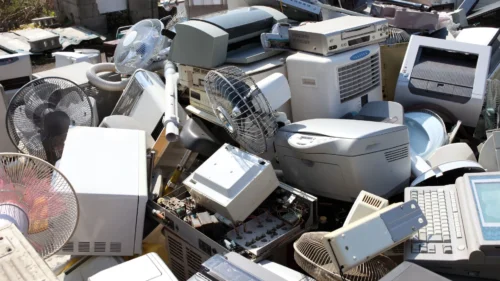
The exact process depends on the type and condition of the equipment.
Reusable items may be assessed for repair or refurbishment. Waste equipment intended for recycling can be taken to an authorised facility, where it may be sorted, dismantled and treated. Components requiring special handling are removed, while suitable metals, plastics, glass and other materials can be recovered.
Fridges, freezers, air-conditioning equipment, fluorescent tubes, screens and battery-containing devices may require different treatment from ordinary household junk.
For this reason, it is useful to tell a rubbish removal companyrubbish removal company exactly which electrical items need to be collected before the job is booked.
Can Businesses Put E-Waste in General Waste?
Businesses should not simply mix unwanted electrical equipment with ordinary commercial rubbish.
Commercial waste has duty-of-care requirements, and businesses need to make sure their waste is transferred to an authorised person and described correctly. Depending on the equipment, additional WEEE requirements may also apply.
Offices replacing computers, monitors, printers or other technology should also consider data security. Personal or commercially sensitive information should be removed from storage devices before equipment leaves the premises, with secure data destruction used where necessary.
What Electrical Items Should Be Recycled?
As a practical rule, if an unwanted product needs a plug, battery or charging cable to operate, it is worth checking whether it should enter an electrical recycling stream.
Common examples include computers, screens, televisions, kitchen applianceskitchen appliances, vacuum cleaners, lamps, electronic tools, phones, tablets, games equipment and small rechargeable devices.
Do not dismantle potentially hazardous equipment simply to make it easier to throw away. Specialist items should be left intact and handled through an appropriate collection and treatment route.
Choose Responsible E-Waste Removal
Recycling e-waste instead of landfill is not only about getting rid of old electronics. It is about making sure useful materials are recovered, potentially harmful components are handled correctly and electrical products do not become unnecessary general waste.
Before arranging a rubbish clearance, separate electrical items from ordinary waste and tell the collection company what needs to be removed. Large appliances, TVs, monitors, batteries and other specialist items may need separate handling or pricing.
For household clearances, office moves, refurbishments or simply getting rid of old electrical equipment, responsible collection gives unwanted electronics a better destination than landfill.
FAQs
Why is e-waste bad for landfill?
Electrical waste can contain valuable materials as well as components or chemicals that need controlled treatment. Landfilling it wastes recoverable resources and can increase environmental risks.
Can I put small electrical items in the household bin?
Electrical products displaying the crossed-out wheelie-bin symbol should not go into ordinary household rubbish. They should be taken to an appropriate collection or recycling point.
Is recycling better than throwing away working electronics?
If an electrical item is safe and still works, reuse, donation or refurbishment may be preferable. Recycling is more appropriate when the product has genuinely reached the end of its useful life.
Can old TVs and computer monitors be recycled?
Yes. TVs and monitors are common forms of WEEE, but they should be collected and treated through an appropriate electrical waste route rather than mixed with general rubbish.
Should batteries be removed before recycling electronics?
If a battery is designed to be safely removed, it can often be recycled separately. Devices with built-in batteries should be handled as electrical waste without forcing the battery out.