Garden Waste Removal What Councils Won’t Take
 By dinesh
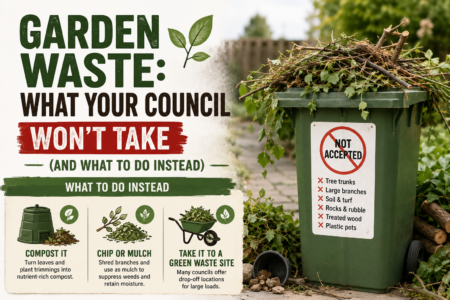
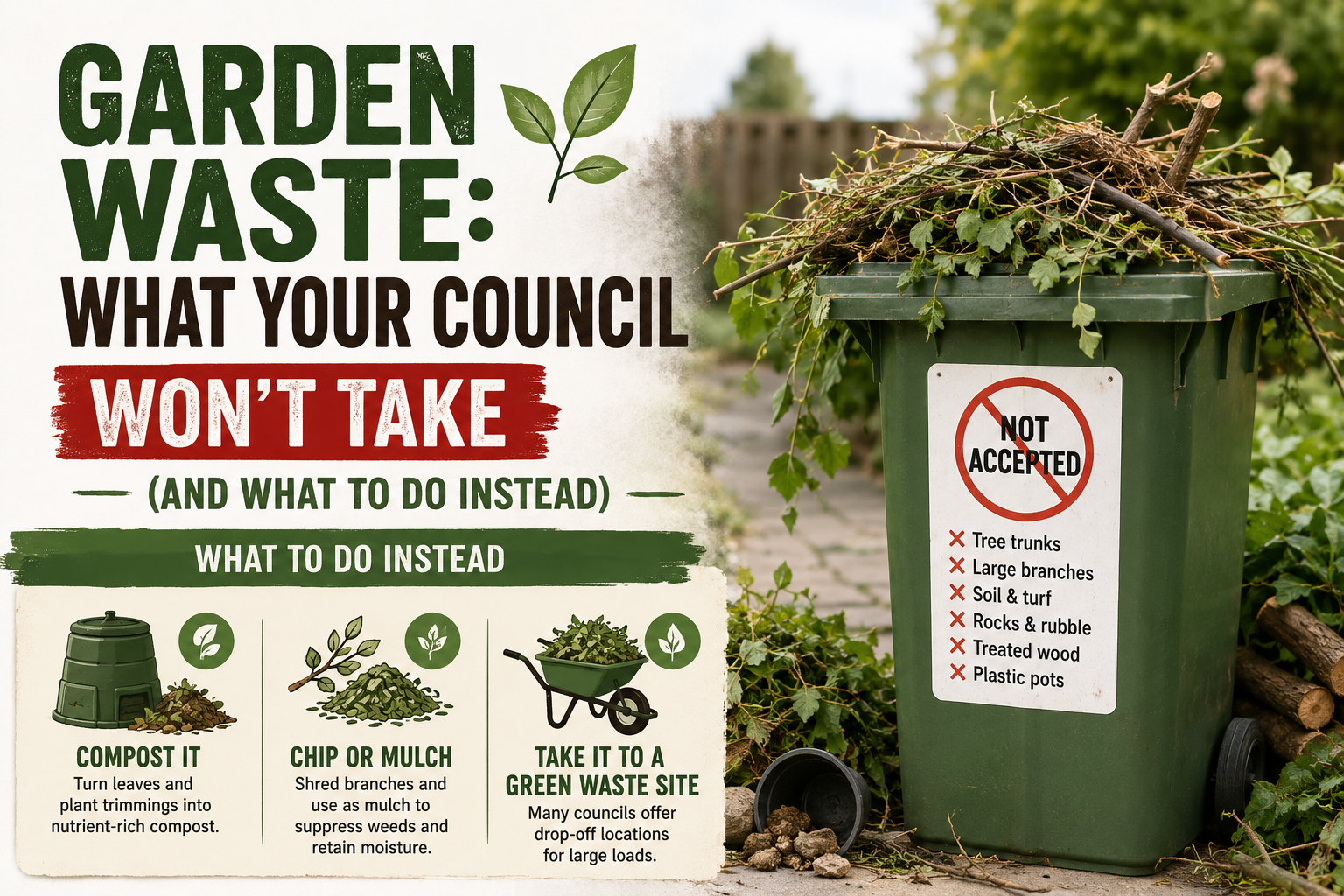
Garden Waste: What Your Council Won’t Take (And What to Do Instead)
Every spring and autumn, the same problem turns up in gardens across the country: a pile of waste that’s grown faster than anyone planned for, and a green bin that simply isn’t built to handle it. Hedge trimmings, old turf, broken fencing, soil from a raised bed project — garden waste has a habit of escalating quickly, and most councils have stricter limits on it than people expect.
Here’s what actually happens to garden waste, where the rules trip people up, and what your options are when the bin just isn’t going to cut it.
Why Garden Waste Isn’t as Simple as “Green Bin”
Most UK councils offer a garden waste collection, but it usually comes with conditions that catch people out:
- It’s often a paid subscription, not an automatic part of your council tax
- Collections are typically fortnightly, and some councils pause the service entirely over winter
- There are strict limits on what’s accepted — usually grass cuttings, hedge trimmings, leaves, and small branches only
- Bin capacity is fixed, so a big clear-out (an overgrown hedge, a dug-up flowerbed, a fallen branch after a storm) will overflow it in one go regardless of collection day
The bigger issue is what falls outside the green bin entirely. Soil, turf, rubble, fence panels, decking, and large branches are commonly excluded — meaning a typical garden tidy-up or landscaping project produces waste your council collection was never designed to take.
What Doesn’t Count as “Green Waste”
It’s worth being clear on this, because it’s the most common mix-up:
| Usually accepted | Usually NOT accepted |
| Grass cuttings | Soil and turf |
| Hedge and shrub trimmings | Rubble, paving, bricks |
| Leaves and small twigs | Fence panels, decking, sleepers |
| Small branches | Tree stumps and large branches |
| Weeds | Pots, plastic edging, garden furniture |
If your project involves any digging, structural changes, or removing fixed garden features, you’re almost certainly generating waste that needs a different route entirely.
Your Options When the Bin Isn’t Enough
Take it to the tip yourself. Workable for small amounts, but soil and rubble are heavy, most tips cap the number of free visits per year, and you’ll need a vehicle that can handle the load — and the mess.
Hire a skip. Sensible for a large, one-off landscaping job, but you’ll need space for it, possibly a permit if it’s on the road, and it’ll sit there for the duration of the hire whether you’re actively filling it or not.
Book a collection. For most garden clear-outs — a hedge that’s finally come down, old decking ripped up, a flowerbed dug over — a direct collection is usually the most practical route. Someone turns up, takes everything in one go, and there’s no bin limit, no tip run, and no skip taking up the driveway. This is exactly the kind of job we deal with regularly at Snappy Rubbish Removals: same-day garden waste collection, sized to the job rather than the bin.
A Few Things Worth Knowing Before You Start
- Treated wood and painted fencing often can’t go in standard garden waste streams — they need to be flagged separately.
- Soil contaminated with chemicals or pesticides may need specific disposal, not general green waste.
- Bonfires have rules too — many councils restrict garden waste burning, particularly in built-up areas, so it’s worth checking before treating it as a free disposal option.
- Composting helps, but only for soft green waste — it won’t touch turf, branches, or anything structural.
The Seasonal Trap Nobody Plans For
Garden waste isn’t evenly spread across the year — it spikes hard at two points, and both catch people out for different reasons.
Spring is when everything wakes up at once. Overgrown hedges from a winter of neglect, beds dug over for new planting, turf lifted for a patio project. The volume is high, and it tends to land all in one weekend rather than trickling in gradually — which is precisely when a fortnightly green bin collection feels most inadequate.
Autumn brings the opposite problem: not volume from action, but volume from nature. Leaf fall alone can fill a bin in a single week in a garden with mature trees, and many councils pause garden waste collections over the Christmas period entirely — right as the last of the leaves and storm-fallen branches are still coming down.
If your garden backs onto anything with established trees, or you’re planning landscaping work, it’s worth thinking about disposal before the season hits rather than after the pile’s already there.
What a Storm Leaves Behind
One scenario worth a specific mention: storm damage. A fallen branch, a toppled fence panel, or a tree that’s come down across a flowerbed isn’t “garden waste” in the gentle sense — it’s often heavy, awkward, and sometimes genuinely dangerous to move without the right equipment. This is one of the more common reasons people skip the bin-and-tip route altogether and book a direct collection instead, since it removes both the lifting risk and the urgency of getting hazardous material off the property quickly.
Quick FAQ
Can I just leave garden waste in bin bags for the bin men? Most councils won’t take garden waste in standard black bags as part of a general collection — it usually needs to go through the dedicated garden waste subscription, or be taken to a tip/collection service separately.
Is there a weight limit on what a collection service will take? This varies by provider, but most quote based on volume (van load, by-item, etc.) rather than a fixed weight cap, which is part of why a collection tends to suit large or heavy garden clear-outs better than a tip run in the back of a car.
What about green waste from a hired gardener or landscaper? Worth checking before the job starts. Some landscapers include waste removal in their quote; many don’t, and it ends up as a pile at the side of the house unless it’s specified upfront.
The Bottom Line
Garden waste rarely fits as neatly into council collections as people assume, and the gap between “what the bin takes” and “what your garden actually produces” is where most of the frustration comes from. Knowing that gap before you start digging, trimming, or ripping out old features means you’re planning for the right kind of disposal from day one — rather than discovering it the hard way once the pile’s already on the lawn.
If you’ve got a clear-out that’s bigger than your bin can handle, take a look at our garden waste removal service for same-day collection sized to the job, not the bin.